
Cyber Crime Lawyer in Mumbai: Legal Help for Online Fraud, UPI Fraud and Cybercrime Cases
Get legal guidance from a Cyber Crime Lawyer in Mumbai for UPI fraud, online financial scams, credit card fraud, hacking, identity theft and cybercrime cases. Learn about your legal rights and available remedies with Adv. Javed Pashu Sayyed.
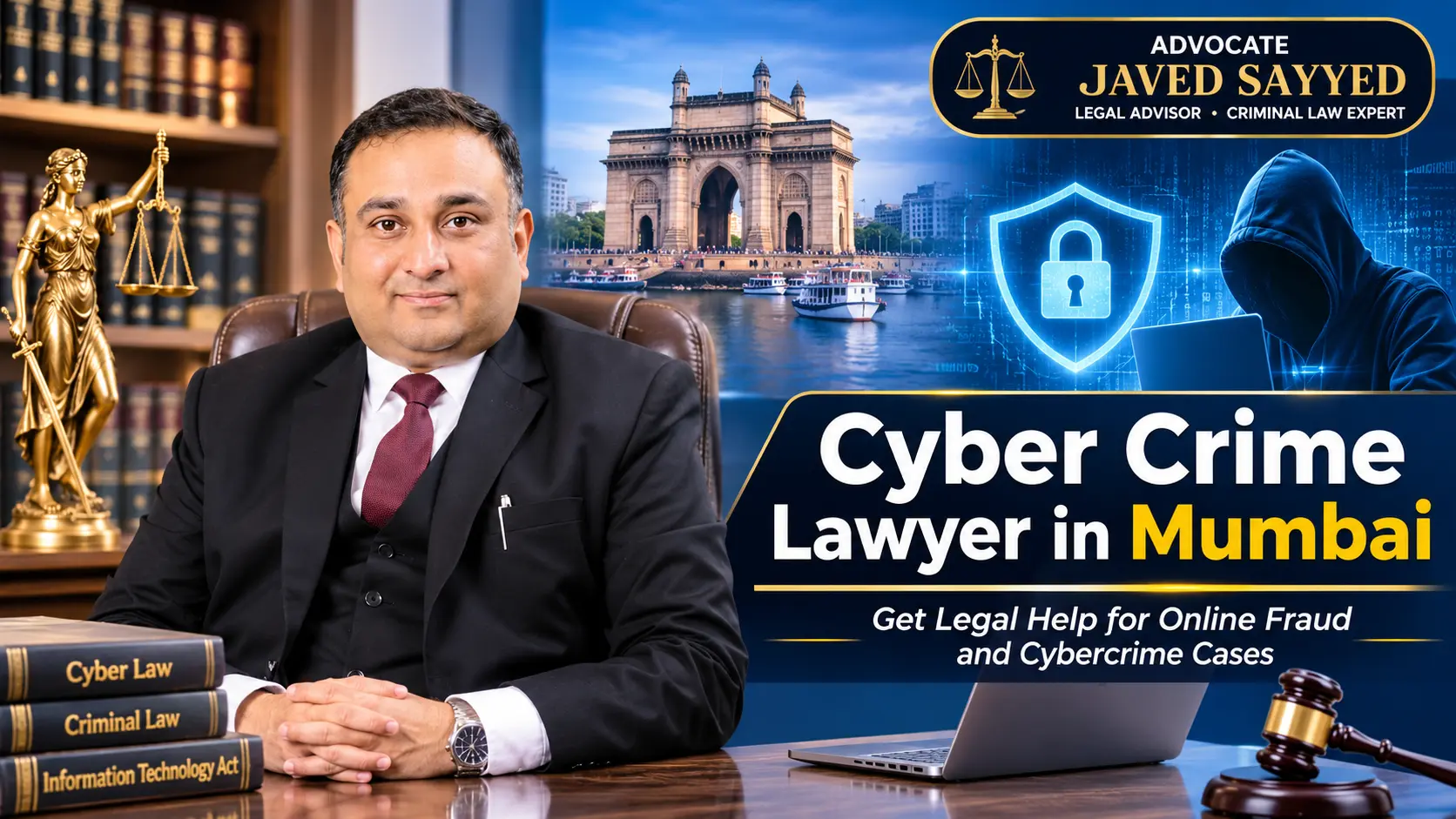
Digital technology has made banking, shopping, communication and financial transactions easier than ever. However, the increasing use of online platforms has also created opportunities for cybercriminals. Today, individuals and businesses face threats such as UPI fraud, credit card scams, phishing attacks, identity theft, social media hacking and online investment fraud.
In many cases, victims lose money because fraudsters use convincing techniques to gain access to personal information or banking accounts. Similarly, individuals accused of cybercrime may face police investigations, criminal allegations and court proceedings. Therefore, understanding your legal rights and seeking appropriate legal guidance becomes important.
If you are searching for a Cyber Crime Lawyer in Mumbai, you should understand the applicable cyber laws, complaint procedures and legal remedies available under Indian law.
Adv. Javed Pashu Sayyed practises in criminal litigation and related legal matters before the Bombay High Court, Mumbai Sessions Court, Supreme Court of India and other judicial forums. His broader criminal litigation practice involves legal proceedings that require careful examination of documents, evidence and applicable legal provisions.
This article explains common cybercrime cases, online financial fraud remedies and the role of a cybercrime advocate in Mumbai.
Why Do You Need a Cyber Crime Lawyer in Mumbai?
Cybercrime cases often involve electronic records, banking transactions, mobile devices and digital communication. Consequently, these matters require careful legal examination and an understanding of criminal law.
A Cyber Lawyer in Mumbai can help individuals understand their legal position and identify appropriate remedies based on the circumstances.
Legal assistance may involve:
Online financial fraud and banking scams.
UPI and digital payment fraud.
Credit card fraud and unauthorised transactions.
Social media hacking and identity theft.
Phishing and online impersonation.
Cybercrime police complaints and investigations.
Criminal defence in cybercrime allegations.
Bail applications and related criminal proceedings.
Legal proceedings involving electronic evidence.
Furthermore, early legal consultation can help individuals preserve relevant documents and understand the correct reporting procedure.
Common Cybercrime Cases That Require Legal Assistance
1. UPI Fraud and Digital Payment Scams
UPI has simplified digital payments. However, criminals sometimes misuse QR codes, fraudulent payment requests, fake refund messages and impersonation techniques.
For example, a fraudster may pretend to be a bank employee or customer care representative and request confidential information. Consequently, the victim may lose money through an unauthorised transaction.
An Advocate for UPI Fraud Cases in Mumbai can examine the available transaction records and explain the legal options available to the affected individual.
If you experience UPI fraud, immediately contact your bank, call 1930 and submit a complaint through the National Cyber Crime Reporting Portal.
2. Online Financial Fraud and Investment Scams
Online financial fraud can involve fake investment platforms, cryptocurrency schemes, fraudulent trading applications and misleading financial advertisements.
In some situations, scammers initially show attractive returns to gain the victim's confidence. Later, they demand additional payments or prevent withdrawals.
A Lawyer for Online Financial Fraud in Mumbai can help examine transaction details, communication records and available legal remedies.
Moreover, preserving payment receipts, bank statements and relevant messages can support the initial legal assessment.
3. Credit Card Fraud
Credit card fraud occurs when someone uses another person's card details or payment credentials without proper authorisation.
Common examples include:
Unauthorised online purchases.
Suspicious international transactions.
Fake banking calls.
Card details stolen through fraudulent websites.
OTP-related payment scams.
A Lawyer for Credit Card Fraud Cases in Mumbai can advise individuals about reporting procedures, relevant cybercrime provisions and possible criminal remedies.
Additionally, victims should immediately contact their card issuer, block the affected card and dispute unauthorised transactions through the bank's official channels.
4. Phishing and Identity Theft
Phishing involves fraudulent emails, messages or websites designed to collect passwords, OTPs and banking information.
Similarly, identity theft involves the unauthorised use of another person's identifying information or electronic credentials.
Section 66C of the Information Technology Act, 2000 addresses identity theft. Furthermore, Section 66D deals with cheating by personation using a communication device or computer resource.
Therefore, victims should preserve suspicious links, emails, messages and other relevant electronic records.
5. Social Media Hacking and Digital Arrest Scams
Cybercriminals may hack social media accounts, create fake profiles or impersonate government officials.
Digital arrest scams have also become a serious concern. In these incidents, fraudsters pretend to represent law enforcement agencies and threaten victims with arrest unless they transfer money.
However, genuine police authorities do not demand money through fraudulent video calls to avoid arrest.
If someone approaches you with such threats, avoid transferring money, preserve communication records and report the incident through official channels.
Important Cybercrime Laws in India
Cybercrime matters may involve multiple legal provisions depending on the nature of the allegations and available evidence.
Some important laws include:
Information Technology Act, 2000
Section 43: Certain unauthorised acts involving computer systems and resources.
Section 66: Computer-related offences involving dishonest or fraudulent acts covered by Section 43.
Section 66C: Identity theft.
Section 66D: Cheating by personation using computer resources.
Section 66E: Violation of privacy.
Bharatiya Nyaya Sanhita, 2023
Sections 318 and 319 may become relevant in cases involving cheating and cheating by personation, depending on the facts.
Bharatiya Nagarik Suraksha Sanhita, 2023
The BNSS governs criminal procedures, including investigation, arrest, bail and court proceedings.
Moreover, the Bharatiya Sakshya Adhiniyam, 2023 provides the applicable framework for evidence, including electronic records.
The correct provisions depend on the incident date, allegations and applicable transitional rules.
What Should You Do After Online Financial Fraud?
Taking immediate action can help authorities and financial institutions respond to a cybercrime incident.
Follow these steps:
Call 1930: Report financial cyber fraud through the national helpline as soon as possible.
File an online complaint: Visit https://cybercrime.gov.in/ and submit the relevant details.
Inform your bank: Report unauthorised transactions and request appropriate action.
Preserve evidence: Keep transaction IDs, UPI details, screenshots, messages and bank statements.
Keep the acknowledgement: Save your complaint reference number for future follow-up.
Seek legal guidance: Consult an advocate to understand the applicable legal remedies and further proceedings.
Importantly, quick reporting may help authorities and financial institutions take timely action. However, recovery of the lost money is not guaranteed.
How to Choose the Best Cyber Crime Advocate in Mumbai?
People searching for the Best Cyber Crime Advocate in Mumbai should consider several factors before selecting legal representation.
Knowledge of cyber laws: The advocate should understand the Information Technology Act and applicable criminal legislation.
Criminal litigation experience: Cybercrime allegations may involve police investigations, bail applications and court proceedings. Therefore, criminal litigation knowledge is valuable.
Understanding of digital evidence: Electronic transactions, messages and other digital records may become important during proceedings.
Proper case assessment: A careful review of documents helps identify relevant legal issues.
Clear communication: Legal procedures and available remedies should be explained clearly.
If you are looking for an experienced cyber crime advocate in Mumbai, focus on relevant legal experience, case preparation and an honest assessment rather than promises of guaranteed results.
Cyber Crime Legal Services Mumbai – Adv. Javed Pashu Sayyed
Cybercrime matters require an understanding of criminal law, digital evidence and applicable legal procedures.
Adv. Javed Pashu Sayyed practises in litigation and legal advisory, with appearances before the Bombay High Court, Mumbai Sessions Court, Supreme Court of India and other judicial forums.
His broader criminal litigation practice includes bail applications, anticipatory bail, regular bail, FIR quashing, criminal trials, appeals and revision proceedings.
Individuals seeking information about Cyber Crime Legal Services Mumbai can explore his official website to understand his legal practice and areas of work.
Adv. Javed Pashu Sayyed
Website: https://www.javedpashusayyed.com/
Office: 2nd Floor, WeWork, Express Towers, Nariman Point, Mumbai, Maharashtra – 400021.
Frequently Asked Questions (FAQs)
1. Who is a Cyber Crime Lawyer in Mumbai?
A Cyber Crime Lawyer in Mumbai handles legal matters involving online fraud, UPI scams, hacking, identity theft, phishing and other cyber offences. The advocate may also assist with police investigations and criminal court proceedings.
2. What should I do if someone commits UPI fraud against me?
Immediately contact your bank, call 1930 and register a complaint at the National Cyber Crime Reporting Portal. Additionally, preserve transaction details and screenshots.
3. Can a lawyer help recover money lost through online fraud?
An advocate can explain available legal remedies and assist with appropriate proceedings. However, actual recovery depends on the transaction trail, investigation and action taken by the relevant authorities and financial institutions.
4. Which laws apply to cybercrime cases in Mumbai?
The Information Technology Act, 2000, Bharatiya Nyaya Sanhita, 2023 and other applicable criminal laws may apply depending on the nature of the incident.
5. Can I file a cybercrime complaint online?
Yes. You can submit a complaint through the official National Cyber Crime Reporting Portal at https://cybercrime.gov.in/.
6. When should I consult a Cyber Crime Attorney in Mumbai?
You should consider legal consultation after an online fraud, identity theft, hacking incident, police notice or criminal allegation involving digital activities.
7. Can an advocate help with credit card fraud cases?
Yes. An advocate can examine transaction records, explain reporting procedures and advise on applicable legal remedies in credit card fraud matters.
8. What documents are important in a cybercrime case?
Important documents may include bank statements, transaction IDs, UPI references, screenshots, emails, phone numbers, complaint acknowledgements and relevant digital communication.
9. What is the role of a Cyber Law Expert in Mumbai?
A cyber law professional can help individuals understand applicable cyber legislation, digital evidence, online fraud complaints and related criminal proceedings.
10. Where can I find information about Adv. Javed Pashu Sayyed?
You can visit https://www.javedpashusayyed.com/ to learn about Adv. Javed Pashu Sayyed, his legal practice, court appearances and areas of work.